



There’s a pattern on LinkedIn and Substack that, once you see it, you can’t unsee. Someone posts a piece about “how I grew to 10,000 followers in 30 days.” That post gets engagement from people who want to grow their own followers. Those people then post their own version of the same advice. Their posts get engagement from the next wave of people who want to grow. And so on, forever, in a loop that produces nothing of value for anyone except the platforms hosting it.
It’s a ponzi. An attention ponzi. And I hate it.
I’ve spent the last few days starting to build a presence on Substack and LinkedIn, and the experience has been genuinely disheartening. Not because it’s hard to get traction, though it is, but because of what the ecosystem actually looks like when you’re standing inside it.
The Timeline Is a Mirror of Itself
My Substack timeline right now is almost entirely the same posts, reworded slightly, published by different people, preying on the hope and naivety of those new to the platform. This is nothing short of parasitic.
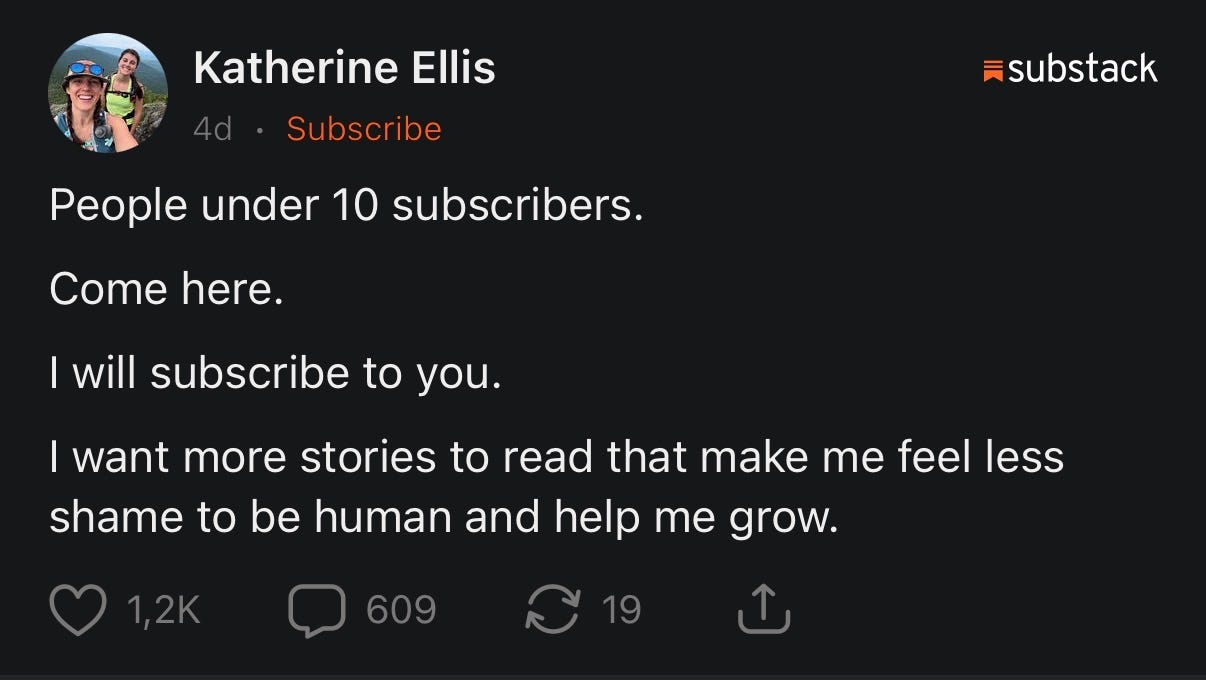
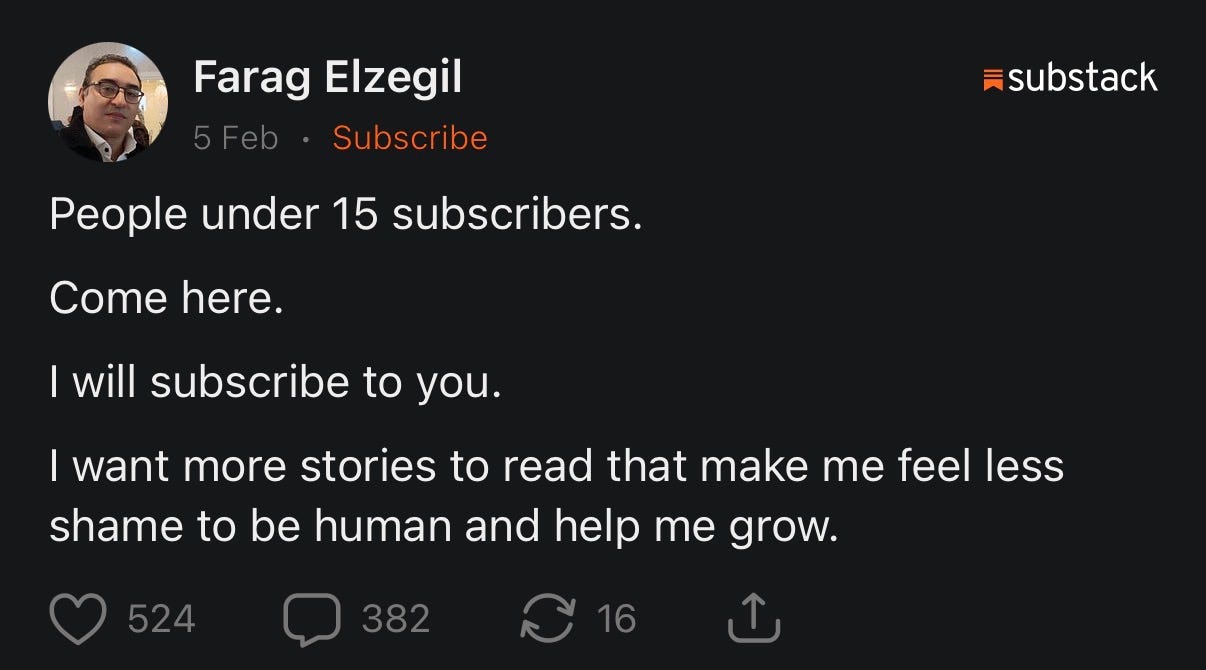
Meanwhile the ‘expert’ growth advice is always some variation of: comment on other people’s posts, join engagement groups, post consistently, and use a hook that creates curiosity. The people giving this advice are growing their accounts by giving this advice. The people engaging with it are doing so because they want to replicate the growth. The content itself has no substance beyond the meta-game of content growth.
I started screenshotting duplicate posts and pasting them in the comments of each other, pointing out that they’d written the same thing verbatim. Then I realised that was an even bigger waste of time than trying to grow my own account, and I stopped.
But the problem isn’t just the repetition. It’s the complete absence of anything underneath. There’s no original thinking. No actual domain knowledge. No ideas that required the author to have lived through something or figured something out. It’s pure performance, and the only people watching are other performers.
The Richard Harpin Problem
There’s a specific thing I keep noticing on LinkedIn that crystallises this. Richard Harpin, the guy who sold HomeServe for something like £4 billion, seems to comment on every single post in my timeline. At first I thought, fair enough, billionaire with time on his hands, unusually engaged on social media, looking to share wisdom. Then I looked more carefully.
Every comment is specific enough about the post to seem like it was written by someone who read it, but generic enough that it could have been generated by feeding the post into a language model with the instruction “write something Richard Harpin might say about this”. It sits in that uncanny valley between authentic and synthetic.
I’m now about 99% sure that either a human assistant is running his account with a significant amount of AI support, or the whole thing is fully automated. Either way, Richard Harpin has almost certainly never seen most of the posts he’s apparently responding to. And the thing is, it works. His name is everywhere. His visibility is enormous. But what is it actually worth? What does it mean to have your name attached to thousands of comments you never wrote, on posts you never read, expressing opinions you never truly held?
This is where the growth-hacking mindset leads. You optimise for visibility until the visibility is completely detached from anything real. You become a brand without a person behind it.
Everyone Says You Have to Play the Game
The standard advice, the stuff that every growth thread and every Substack guide will tell you, is that you have to do some version of what Harpin is doing. Comment on posts in your niche. Engage with people who have bigger audiences than you. Join engagement pods. Be “consistently visible.”
I refuse to do any of it.
Not just because it’s a time investment I’m not prepared to make, but because it’s such a cynical exercise. You’re not commenting because you have something to say. You’re commenting because the algorithm rewards the appearance of conversation, and the easiest way to get in front of someone else’s audience is to insert yourself into their comments section with something that sounds thoughtful but cost you nothing to produce.
And everyone knows this. The people whose posts you’re commenting on know you’re doing it for visibility. The people reading the comments know it’s performative. The whole thing is a shared fiction that everyone participates in because the alternative, actually earning attention by having something worth saying, is slower and less predictable.
What the Ponzi Creates
The deeper problem isn’t that this stuff exists. People have always gamed distribution. The problem is what it does to the environment for everyone else.
When the timeline is 90% growth-hacking content and engagement-farming comments, the signal-to-noise ratio collapses. People with genuine expertise or original thinking get buried under a flood of recycled templates. The reader’s experience degrades. Trust erodes. And eventually, the platform becomes a place where the only people left are the ones playing the game, talking to each other about how to play the game, in a closed loop that produces nothing for the outside world.
It’s the same dynamic as a financial ponzi. Early participants get returns because later participants keep joining. But the underlying asset, the actual content, the actual insight, doesn’t exist. When you strip away the meta-game, there’s nothing there.
And now AI is accelerating the whole cycle. The barrier to producing generic-but-plausible content has dropped to zero. Anyone can generate a year’s worth of LinkedIn posts in an afternoon. Anyone can set up automated commenting that’s specific enough to pass casual inspection. The flood is going to get worse before it gets better.
The Bet on Credibility
Here’s what I think the counter-strategy is, and I’ll be honest, it’s more of a conviction than a proven playbook.
The attention ponzi works in the short term because platforms reward activity. But it doesn’t build anything durable. The people who are growing by gaming engagement aren’t building audiences that trust them. They’re building follower counts that look impressive in a screenshot but evaporate the moment they try to convert that attention into anything real, a product, a hire, a partnership, anything that requires the other person to actually believe what you’re saying.
Credibility compounds differently. It’s slower. It doesn’t spike. But when someone trusts your thinking, they come back without being prompted. They share your work because it made them think, not because you commented on their post first. They remember your name because of an idea you gave them, not because your profile picture appeared in their notifications fourteen times.
I think the next few years are going to widen the gap between people who optimised for attention and people who optimised for credibility. As AI makes it trivially easy to flood every platform with plausible-sounding content, the ability to say something that clearly came from firsthand experience, from actually having done the work or thought the thought, becomes rarer and therefore more valuable.
The ponzi participants are racing to produce more content. The credibility play is to produce content that couldn’t have been produced by someone who hadn’t actually lived through the thing they’re writing about.
Where This Leaves Me
I’d rather schedule everything and never look at any of these platforms again. That’s a sad thing to admit about the tools you’re supposedly using to build a public presence, but it’s where I am. The content itself, the ideas, the writing, that part I care about. The distribution game, the engagement theatre, the cynical visibility grind, I want no part of it.
If there’s no light at the end of the tunnel after three months, I might just pack a bag and go for a very long walk. And honestly, the content that would come out of that would probably be more interesting than anything that comes out of commenting on strangers’ LinkedIn posts. At least it would be real.
The attention ponzi rewards speed, volume, and shamelessness. But it doesn’t reward depth, and it can’t manufacture trust. I’m betting that trust is the scarcer resource. We’ll see.
I'm 100% on board with you, Theo. I refuse to lower myself to that lack of a standard. If that means success in the social media realm doesn't come, then it's probably for the best, if that's what comprises the social media sphere and what it takes to break into it.
Yet, I remain hopeful. I've seen genuine voices succeed, and they did so BECAUSE they were genuine, not because they conformed.